
Column
When Elders Dance Naked in the Open Market.
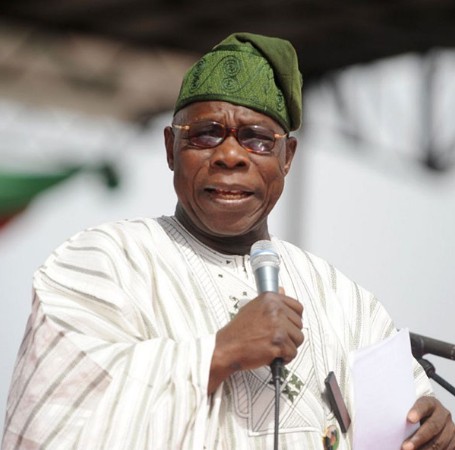
The recent conflict between former President Olusegun Obasanjo and former governor of Ekiti State Governor Ayo Fayose has starkly highlighted the troubling decline of decorum among Nigeria’s political elites. Habaa, kilode? I am ashamed on behalf of these elders. This public discord, which erupted during Fayose’s 65th birthday celebration, is not simply a personal squabble; it exemplifies the erosion of respect and dignity among those in positions meant to lead and inspire.
Baba Obasanjo was invited by the celebrant in a spirit of peace and reconciliation. Instead of responding with the courtesy that such an invitation deserved, the elder seized the opportunity to publicly humiliate the celebrant. He dredged up private conversations, claiming he had told Mr. Ayo Fayose and his wife that they were not Omolúàbí, (people of honor) and reiterated this before the assembled crowd. Rather than offer a correction, he verbally lashed out on the man’s own birthday. (Haba, kilode, agba ki n s’oro bi ewe)
We know Baba Obasanjo as a veteran politician and former head of state who has navigated the complexities of Nigeria’s political landscape for decades. And Mr Ayo Fayose is well known for his outspoken and often controversial nature. These two are prominent figures in Nigerian politics as former military and civilian president and as former state governor. With their background and experience, these are elders that should be holding the hands of young ones to show them the way but rather than embodying the wisdom and gravitas expected of their roles and positions, both leaders opted for a public confrontation that resembled a chaotic altercation. Both men have proven to us that their age and past positions do not automatically qualify them as role model. They went far too low.
Utilizing Fayose’s 65th birthday celebration as a platform for a harsh and abusive critique was both inappropriate and insensitive. Even the celebrant’s wife was not spared from the vitriol. Baba Obasanjo effectively tarnished the occasion for Fayose. His attendance at the birthday party wasn’t a gesture of goodwill or an expression of statesmanship and reconciliation; rather, it was an opportunity for revenge, as he publicly lambasted the celebrant with derogatory comments in front of the guests.
Fayose’s vitriolic “Thank You” note aimed at Obasanjo was laden with personal insults, accusing the elder statesman of senility and hypocrisy. Such conduct is unbecoming of any leader, particularly one addressing a former president. This incident goes beyond mere personal grievances; it highlights a deeper crisis in leadership where personal pride and ego take precedence over mutual respect.
This unfortunate exchange transcends a simple clash of egos; it reflects a broader failure of leadership that resonates throughout Nigeria as a nation. Elders are traditionally expected to serve as role models, imparting lessons of maturity, integrity, and humility to the younger generation. The current behavior of these leaders, however, leaves much to be desired, prompting the youth to question the very essence of leadership in Nigeria.
As we move on from this incident, it is crucial to consider its implications for society. What message is conveyed to the youth when those in power engage in such disgraceful antics? How can we nurture a generation of leaders when the current ones are preoccupied with trivial disputes, ugly open drama and personal grudges?
It is imperative for our leaders to reflect on the example they set. The political sphere should not devolve into a battleground for personal conflicts but serve as a forum for constructive dialogue aimed at societal improvement. Both Baba Obasanjo and Mr. Ayo Fayose must understand that their public actions resonate beyond their personal narratives; they are emblematic of a political culture in dire need of rejuvenation.
Whether you admire him or not, Baba Obasanjo could benefit from emulating President Tinubu’s strategy in handling political adversaries. Tinubu refrains from engaging in verbal confrontations; instead, he maintains a friendly and cordial demeanour whenever he encounters them in public.
The saying goes, “When elders dance naked in the open market, the youth will not learn to wear clothes.” Our leaders must adorn themselves with dignity and respect, establishing a standard for others to emulate. It is not too late for Baba Obasanjo and Mr. Ayo Fayose to seek reconciliation and embody the true spirit of leadership—serving as mentors rather than adversaries. The future of our nation hinges on their ability to rise above this discord.