
Editorial
Anthony Joshua’s Car Accident: The Injustice of Reckless Driving Charges
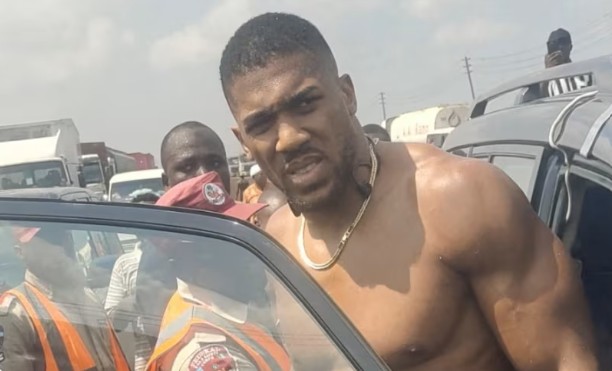
The recent tragic accident that claimed the lives of two friends of Anthony Joshua has once again illuminated the glaring inadequacies of Nigeria’s road safety and judicial systems. The driver, Adeniyi, has been arrested for reckless driving and speeding, allegedly exceeding the 65-mph limit on the Lagos-Ibadan Expressway. This incident raises critical questions about the nature of justice in Nigeria and the systemic failures that contribute to road tragedies. The driver Adeniyi Mobolaji Kayode, 46, appeared before the Sagamu Magistrate Court on Friday January 2, 2026 in connection with the accident. Kayode was charged on four counts, including causing death by dangerous driving. The question is how did the agency or Police arrived at “dangerous driving”? Any video footage or just an assumption?
A System Failing Its Citizens
The Lagos-Ibadan Expressway, often touted as a vital artery for commerce and travel, has been under continuous rehabilitation for over 30 years. Each administration has allocated substantial funds for its improvement, yet the road remains plagued by inefficiencies and hazards. It is shocking that, despite these investments, the expressway lacks modern technology to monitor speed and enforce traffic laws effectively. In more developed countries, CCTV systems would swiftly provide evidence to support claims of reckless driving, helping to ensure accountability. Instead, Nigeria finds itself in a state reminiscent of the 16th century, operating without the basic infrastructure necessary to protect its citizens.
Emergency Response: A Critical Shortcoming
Accidents can happen anywhere, but the response that follows is crucial. In this case, the absence of any ambulances on the scene was a glaring failure. Instead of immediate medical assistance, a police pickup van was used to transport survivors. This not only reflects poorly on the emergency response infrastructure but also raises serious concerns about the prioritization of citizen welfare. At an accident scene in a more civilized setting, you would expect the area to be cordoned off, with trained paramedics on hand to rescue survivors and at least one fully equipped ambulance ready to provide first aid and stabilize victims. However, what we witnessed at the site of Anthony Josua’s car crash was disheartening and embarrassing. Instead, there were idle youths, often referred to as ‘area boys,’ who should have been working in factories, but were instead loitering and recording the scene on their phones. The optics were truly appalling.
A social media influencer named “JustAdetoun” called out the Ogun State governor for failing to provide ambulances at the site of a recent accident, which occurred on the Ogun State stretch of the expressway. In response, the Ogun State government released a video showing a fleet of ambulances parked in a government agency’s yard—vehicles that should have been positioned for swift deployment. This glaring discrepancy underscores a systemic failure in emergency preparedness and resource allocation. When lives are on the line, the lack of timely medical intervention can be the difference between life and death. While ambulances are available, there’s a critical lack of strategic planning in their deployment.
Double Standards in Justice
The arrest of Adeniyi poses a troubling question: if Anthony Joshua had been behind the wheel and survived, would he have faced the same legal scrutiny? The unfortunate reality is that those with affluence and influence in Nigeria often find themselves shielded from the consequences of their actions. This double standard undermines the rule of law and perpetuates a culture of impunity, where wealthy individuals escape accountability while ordinary citizens are left to bear the brunt of the system’s failings.
The swift charge against Adeniyi feels like a knee-jerk reaction by authorities eager to demonstrate their commitment to justice but lacking in genuine understanding of the underlying issues. Rather than allowing the driver to recuperate and process the emotional trauma of the accident, the system has responded with punitive measures that do little to address the root causes of such tragedies. Another account of the unfortunate incident suggests that brake failure, rather than reckless driving, was to blame. The relevant authorities should conduct a post-accident test to confirm whether brake failure was indeed the cause, rather than prematurely concluding it was due to reckless behavior. We shouldn’t mask our shortcomings by pointing at who to blame.
A Call for Change
What Nigeria needs is not just the punishment of individuals but a comprehensive overhaul of its road safety and judicial systems. Modern technology should be employed to monitor road usage, enforce speed limits, and issue penalties to offenders. The introduction of automated systems for issuing tickets and suspending licenses could help to create a culture of accountability among all road users, regardless of their social status.
Moreover, it is essential for authorities to engage in transparent dialogue about the state of our roads and the measures being taken to improve them. Citizens deserve to know how their tax money is being spent and why, despite decades of promises, the Lagos-Ibadan Expressway remains a dangerous thoroughfare.
Conclusion
The tragic loss of life in this accident is a sobering reminder of the urgent need for reform in Nigeria’s approach to road safety, emergency response, and justice. By addressing systemic failures, ensuring accountability, and eliminating double standards, we can create a safer environment for all road users. It is time for Nigeria to move beyond knee-jerk reactions and invest in genuine solutions that protect its citizens and uphold the rule of law. We pray for quick recovery for Anthony Joshua and may God comfort the families of the departed and rest the souls of the departed friends, Sina Ghami and Abdul Latif “Latz” Kevin Ayodele.