
Editorial
Tinubu’s Political Dominance and the Shrinking Opposition: Is Nigeria’s Democracy at Risk?
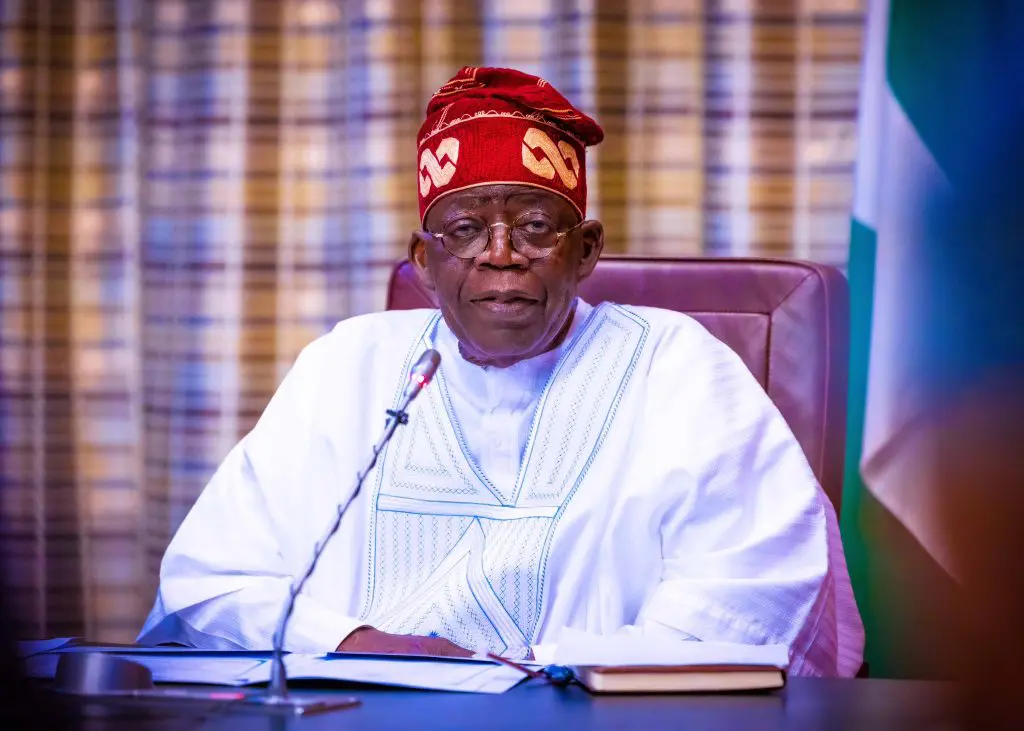
Nigeria’s democracy is facing a defining test, one that goes beyond elections and into the deeper question of whether political power can coexist with genuine opposition.
President Bola Ahmed Tinubu assumed office with formidable political leverage. With the support of the ruling party’s vast machinery and the alignment of more than 30 state governors, his administration arguably possesses one of the strongest political footholds in Nigeria’s democratic history. Under such conditions, governance, not political survival, should be the central focus. Yet, unfolding events suggest a different priority: the systematic weakening of opposition forces.
Across the political landscape, there are growing concerns that opposition parties are being destabilised not merely by internal crises, but by external pressures that appear calculated. The role of the Independent National Electoral Commission (INEC), long regarded as the cornerstone of electoral credibility, is increasingly being questioned. Decisions surrounding the recognition of disputed party leadership have sparked accusations that the commission is deviating from its expected neutrality. Whether by design or consequence, such actions risk fueling division within opposition ranks and eroding public trust in democratic institutions. As seen in the case of ADC leadership.
Within the Peoples Democratic Party (PDP), the situation is even more complex. The rising influence of Nyesom Wike, a key political actor perceived by many as aligned with the ruling establishment has intensified internal fractures. His growing grip on party structures, alongside loyalists occupying strategic positions, has reinforced a troubling narrative: that the opposition is being weakened from within. When a major opposition party appears compromised, the entire democratic equilibrium is thrown off balance.
Democracy thrives on competition. It depends on the presence of strong, independent opposition voices capable of holding those in power accountable. Without that balance, governance risks sliding into dominance—where dissent is not debated but diminished.
This is why recent remarks by Peter Obi carry weight. His comparison of the current administration to the era of Sani Abacha is not just political rhetoric; it reflects a deepening anxiety among citizens about the trajectory of the country’s democracy. While such parallels may be debated, they underscore a perception that democratic space may be narrowing.
Nigeria’s democratic history has been shaped by struggles against military rule, against electoral malpractice, and against institutional fragility. It has survived because of the resilience of its people and the existence of political alternatives. But when opposition voices are weakened, whether through internal manipulation, institutional bias, or strategic interference, the system itself begins to tilt dangerously.
The Tinubu administration must recognize that true democratic strength lies not in the absence of opposition, but in its presence. A government confident in its mandate does not fear dissent; it engages it, debates it, and ultimately earns legitimacy through performance.
If current trends persist, Nigeria risks drifting toward a dominant-party system where competition becomes symbolic rather than substantive. And in such a system, democracy may still exist in form, but its spirit would be steadily fading.
At stake is not just political advantage, but the future of Nigeria’s democratic identity.
See also:
Strongman Yesterday, Victim Today: Nigeria’s Repeating Political Cycle
The Grid’s Endless Blackout: Tinubu’s Promise in Ruins
Rising Insecurity After U.S. Airstrikes: Did Foreign Bombs Complicate Nigeria’s War on Terror?
Rivers State is Once Again the Theatre of Political Brinkmanship.
Aggression Over Dialogue: The Perilous Path of America’s Invasion of Venezuela.