

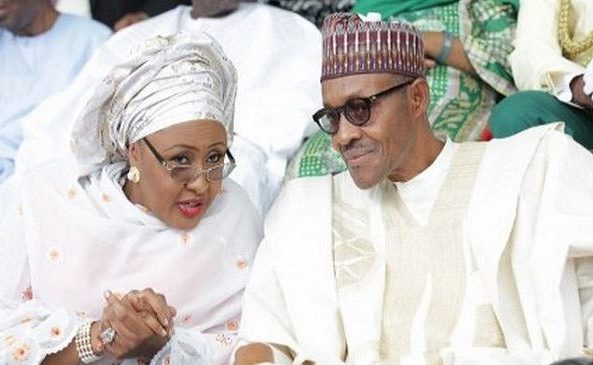
Former First Lady, Aisha Buhari, has recounted how rumours spread within Aso Rock that she wanted to hurt her husband, the late President Muhammadu Buhari. She said the rumour created an atmosphere of fear and mistrust that made him stop adhering to his health routine, thus deteriorating his health.
“That was why he began locking his bedroom and changing his patterns, from not eating to not taking his supplements,” she added.
“The Health Crisis that made the President spend a cumulative total of 154 days on medical leave in 2017, was not a case of poisoning or a mysterious illness, but a consequence of his failure to adhere to his feeding regimen,” explains the President’s wife.
Her role has been documented in a recently published biographical book of about 600 pages, captioned “From Soldier to Statesman: The Legacy of Muhammadu Buhari.” This biographical sketch, put together by Dr Charles Omole, was launched at the state house recently on Monday, and the book has a total of 22 chapters, outlining the life of Muhammadu Buhari from Daura, in Katsina State, to his death in a London Hospital in mid July, 2025.
According to the book, Mrs Buhari had long supervised her husband’s meals and supplements at specific hours, a regimen she said helped “a slender man with a long history of malnutrition symptoms” maintain strength.
“Elderly bodies require gentle, consistent support,” she recalled, adding, “He doesn’t have a chronic illness. Keep him on schedule.”
As described, the nutrition program included meal timing, vitamin supplements, and the addition of oils and proteins, which she communicated to major players in the President’s household, including his physician and security personnel, after they relocated into the Presidential Villa.
She said, “Daily, cups and bowls with tailored vitamin powders and oils, a touch of protein here, a change to cereals there.”
“When the Presidency’s machinery took over our private lives, she explained the plan: daily, at specific hours, cups and bowls with tailored vitamin powders and oil, a touch of protein here, a change to cereals there. Elderly bodies require gentle, consistent support,” Omole narrated.
However, the routine frayed.
“Then came the gossip and the fearmongering. They said I wanted to kill him,” the book quotes her as saying.
“My husband believed them for a week or so,” she said, revealing that the President began locking his room, changed small habits, and crucially, “meals were delayed or missed; the supplements were stopped. Consequently, his health started to deteriorate.
This deterioration reached a point where there were two major medical trips to the United Kingdom in 2017, where Buhari had to momentarily transfer power to Vice President Osinbajo. As cited in the book, “He was first frightened of, then reluctant to, take his medications,” which made it necessary for his wife to monitor him closely, including encouraging him to take vitamins provided by the hospital along with his meals.
According to Mrs Buhari, his rate of recovery was so rapid that within days he did not require the services of a walking stick and soon started receiving visits from people. This represented both the start and the reversal of his sickness, according to his wife.
However, Omole conceded that there was merit in the criticism that Buhari’s travel for medical care pointed up the problems within the Nigerian medical system, but that there was another side that appreciated the requirement for specialist care for someone of Buhari’s age who had been neglected for so long.
In respect of the Nigerian constitution and the manner in which power was ceded by Buhari on the various occasions that he sought medical attention abroad, Omole approved of the action that demonstrated an “appreciation for the rule of law and the institutional order that defines the Nigerian state.” The book continues to shed light on a culture of mistrust prevalent within the Presidency, with accounts related to the ill health of General Muhammadu Buhari after he confessed that he had been very ill and had blood transfusions.
His outings gave way to speculations about being poisoned or replaced with a lookalike, according to Mrs Buhari.