
Economy
Dangote Refinery Supplies 92% of Nigeria’s Petrol as Fuel Imports Halt
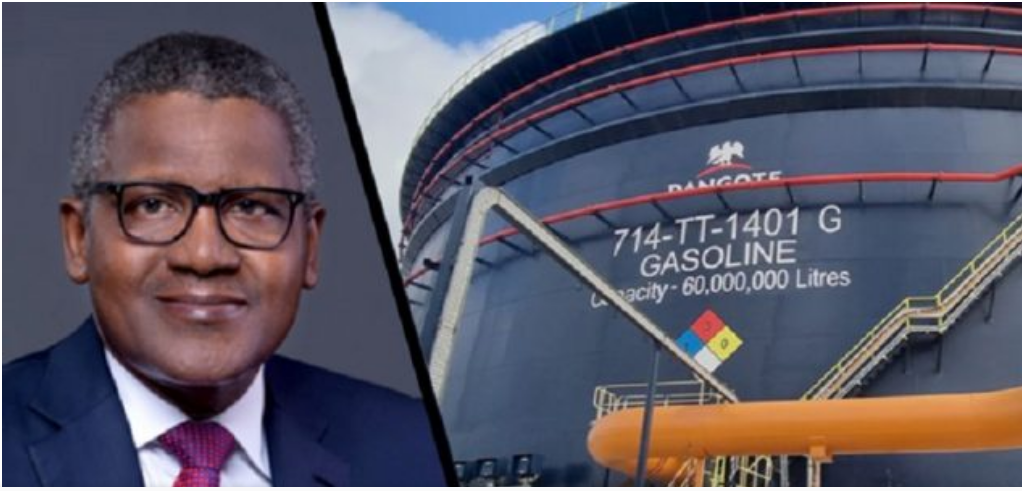
Nigeria’s fuel supply chain is undergoing a significant shift, with the Dangote Petroleum Refinery emerging as the dominant source of petrol in the country following a halt in fuel import licences by regulators.
Latest industry data indicates that domestic refineries supplied about 92 per cent of the nation’s daily petrol demand in February 2026, marking a major departure from Nigeria’s long-standing reliance on imported fuel. The development follows confirmation from officials of the Nigerian Midstream and Downstream Petroleum Regulatory Authority that no licences have been issued for the importation of Premium Motor Spirit (PMS) since the beginning of the year.
According to the regulator’s February fact sheet, Nigeria recorded an average daily petrol supply of 39.5 million litres during the month. Of this volume, local refineries contributed approximately 36.5 million litres per day, while imports accounted for only three million litres daily. Currently, the Dangote Petroleum Refinery remains the only facility producing petrol locally, as other modular refineries in the country focus mainly on diesel production.
Industry officials say the absence of import licences reflects growing confidence that domestic refining can meet the country’s fuel demand. A senior regulatory source confirmed that the decision was influenced by the increased output from the Dangote facility.
“It’s correct that no import licences have been issued this year because domestic production is now sufficient to meet national demand,” the source said.
However, the transition has coincided with a noticeable decline in total fuel supply. The February figure of 39.5 million litres per day represents a sharp drop from the 64.9 million litres recorded in January, when imports averaged 24.8 million litres daily alongside 40.1 million litres from local refineries. Regulators attributed the reduction to the drastic cut in imported fuel.
The shift marks a turning point for Nigeria’s downstream petroleum sector, which has historically depended heavily on foreign petrol shipments due to limited refining capacity. For decades, the country imported the majority of its fuel despite being one of Africa’s largest crude oil producers.
For example, in December 2025, petrol imports averaged more than 42 million litres per day, surpassing the 32 million litres supplied by domestic refineries. Earlier in 2025, imports frequently filled major supply gaps, at times exceeding 38 million litres daily.
But the ramp-up of production at the Dangote refinery has gradually changed that pattern. The $19bn facility, owned by Africa’s richest man, Aliko Dangote, has been scaling up operations since it began refining petroleum products. The refinery is designed to process up to 650,000 barrels of crude oil per day and is expected to supply significant volumes of petrol, diesel and aviation fuel to both domestic and export markets.
Despite the progress in boosting local supply, the growing dominance of the refinery has sparked debate among stakeholders. Some operators warn that the absence of imports could concentrate too much influence in a single producer, potentially leading to monopolistic practices in the downstream market.
One industry operator who requested anonymity expressed concern that limiting import competition could affect price dynamics. According to him, recent industry reports suggested that imported petrol had, at times, been cheaper than locally refined products.
Meanwhile, motorists have yet to experience significant relief at the pumps. Although the refinery recently reduced its gantry price by about N100 per litre, many filling stations across the country continue to sell petrol above N1,200 per litre.
Energy analysts say the situation highlights the complex interplay between domestic refining capacity, distribution costs and market competition in determining retail fuel prices.
Still, the federal government views the growth in local refining as a critical milestone for energy security. By reducing dependence on imports, Nigeria could save billions of dollars in foreign exchange and strengthen its downstream petroleum sector.
With global oil markets facing uncertainty amid geopolitical tensions, the expansion of domestic refining capacity may prove crucial in stabilising fuel supply in Africa’s largest economy.