
Education
NOSA Takes Youth Eye Health Campaign to FG, Screens IDPs in Abuja
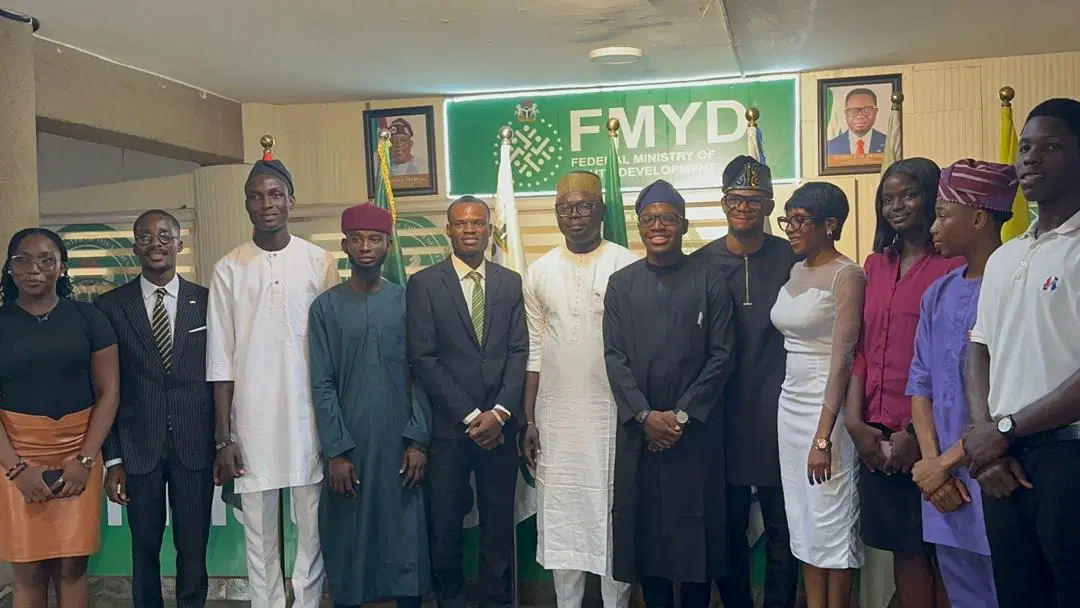
The Nigerian Optometric Students Association (NOSA) has elevated youth eye health advocacy to the highest levels of government, culminating in a large-scale visual screening for internally displaced persons (IDPs) in Abuja.
The three-day advocacy drive began with a courtesy visit to the Minister of Youth Development, Ayodele Olawande, followed by the Youth Eye Health Summit themed “Seeing the Future: Advancing Eye Health for Youth Development in Nigeria,” and concluded with a humanitarian outreach at the Durumi Internally Displaced Persons Camp.
Leading the delegation, NOSA President Nicholas Oke pushed for the integration of eye health into youth-focused programmes under the ministry.
Responding, the minister commended NOSA and the Global Optometry Student Community (OPTOGLOBE) for recognising his efforts with awards and for organising a summit centred on youth vision care.
“Eye health is fundamental to youth development. A young person who cannot see clearly cannot learn optimally, compete effectively, or realise their full potential. We must integrate vision care into our youth programmes and national development strategies,” Olawande said.
The summit convened optometry professionals, policymakers and student leaders to chart a roadmap for youth eye care. In his keynote address, Board Member for Africa at Volunteer Optometric Services to Humanity, Professor Tuwani Rasengane, called for coordinated action across the continent to reduce preventable vision loss among young people.
“We cannot continue to treat preventable blindness as an afterthought. Governments, institutions and communities must act decisively. Collaboration is no longer optional; it is imperative,” he declared.
Addressing the rising burden of myopia among Nigerian youth, Dr. Obinwanne Chukwuemeka Jr warned that lifestyle and environmental factors are driving increasing cases.
“Early detection and proper management are critical. If we fail to intervene now, we risk a generation struggling with avoidable visual impairment,” he cautioned.
Highlighting policy direction, Dr. Oteri Okolo stressed the need to integrate vision screening into primary healthcare and school health services, noting that Nigeria’s National Eye Health Policy provides a framework but requires stronger grassroots implementation.
Also speaking, Senior Technical Adviser to the Minister, Dr. Obinna Ebirim, disclosed that youth eye health programmes would now be incorporated into the ministry’s broader preventive health agenda.
President-Elect of the African Council of Optometry, Dr. Ozy Okonokhua, advocated compulsory vision screening before school admission, proposing that parents submit eye test reports alongside birth certificates.
Meanwhile, the Registrar/CEO of the Optometrists and Dispensing Opticians Registration Board of Nigeria, Dr. Awiaka, announced collaboration with Optometry Giving Sight to strengthen training infrastructure for optometry schools. He revealed that a pilot equipment-support programme had been completed at Arthur Jarvis University in Cross River State.
The advocacy drive ended with a visual screening outreach at the Durumi IDP Camp, where residents received comprehensive eye examinations, health education and referrals for corrective services. Camp secretary Mallam Bala described the intervention as the first eye-focused screening at the facility since 2014.
“For over a decade, no team has come specifically for eye care. This intervention is timely and deeply appreciated,” he said.
At the close of the programme, participants agreed on actionable strategies, including nationwide school-based vision screening, affordable corrective services for low-income youth, teacher and community health worker training, public awareness campaigns, structured mentorship for optometry students and the establishment of a national task force to coordinate child and youth eye health initiatives.
They also proposed integrating age-disaggregated eye health data into Nigeria’s national health information system to improve planning and resource allocation.