
News
Senate passes Electoral Act Amendment Bill
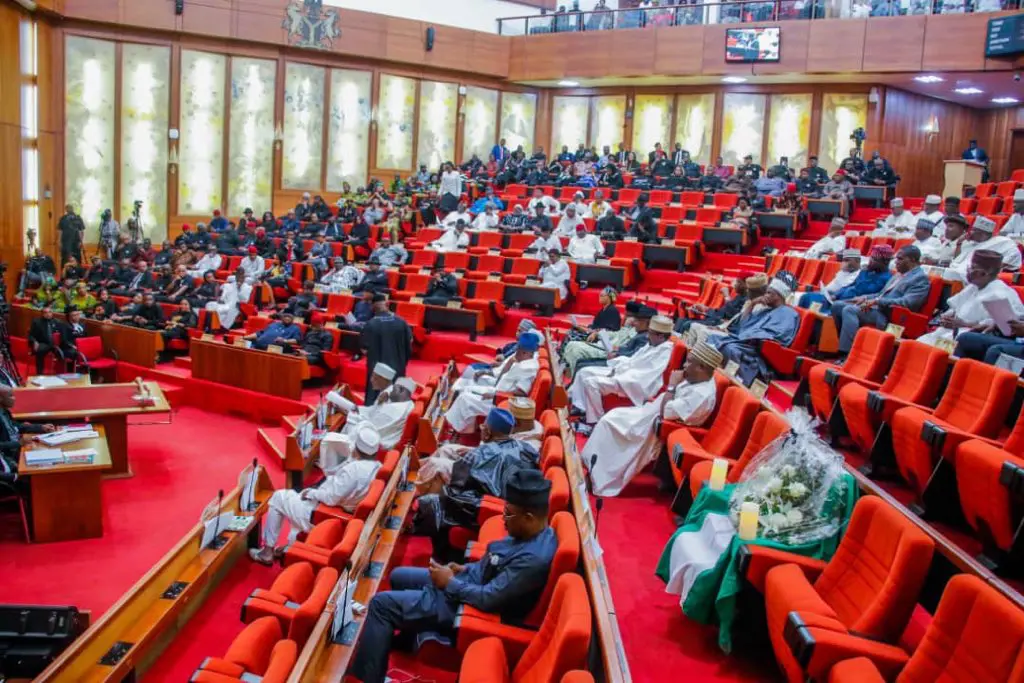
Amid tense deliberations on Tuesday, lawmakers approved the Electoral Act, 2022 (Repeal and Re-Enactment) Bill 2026 after a heated dispute over Clause 60 disrupted proceedings.
The session turned rowdy when Senator Enyinnaya Abaribe (ADC, Abia South) demanded a division on the controversial clause as debates resumed. According to Channels Television, Senate President Godswill Akpabio said he was under the impression that the request had earlier been withdrawn, a claim that drew immediate objections from opposition lawmakers.
In response, Deputy Senate President Barau Jibrin invoked Order 52(6) of the Senate Standing Orders, insisting that it would be procedurally improper to reopen any provision already ruled upon by the presiding officer.
The submission sparked another uproar in the chamber, during which Senator Sunday Karimi briefly confronted Abaribe.Senate Leader Opeyemi Bamidele reminded lawmakers that he had sponsored the motion for rescission, underscoring that prior decisions by the Senate were no longer valid.He maintained that Senator Abaribe’s demand was consistent with the motion.
Akpabio suggested that the call for division was a move by Abaribe to publicly demonstrate his stance to Nigerians.
The Senate President sustained the point of order, after which Abaribe rose in protest and was urged to formally move his motion.
Rising under Order 72(1), Abaribe called for a division on Clause 60(3), specifically regarding the provision that if electronic transmission of results fails, Form EC8A should not serve as the sole basis.
He proposed removing the provision that allows for manual transmission of results in the event of network failure.
During the division, Akpabio directed senators supporting the caveat to stand, then asked those opposed to rise. Fifteen opposition senators stood in opposition. When the votes were counted, 55 senators voted in favor of the proviso, while 15 opposed it.Meanwhile, earlier in the session, proceedings were temporarily stalled as lawmakers began clause-by-clause consideration of the bill, following a motion to rescind the earlier amendment.The motion was formally seconded, paving the way for the Senate to move into the Committee of the Whole for detailed reconsideration and re-enactment of the proposed legislation.
Proceedings resumed with the reading of clauses for consideration, but attention quickly shifted at Clause 60 when Senator Enyinnaya Abaribe raised a point of order, immediately stirring reactions across the chamber.The intervention triggered murmurs among lawmakers and brief consultations at the presiding desk, after which the plenary moved into a closed-door session.
Ahead of the decision to rescind the Electoral Act, several senators expressed concerns about the timing of the 2027 general elections and technical flaws identified in the legislation. Rising on Order 52(6), Senate Leader Opeyemi Bamidele moved a motion to reverse the bill’s earlier passage and commit it to the Committee of the Whole. He explained that the move followed the announcement by the Independent National Electoral Commission fixing the 2027 general elections for February 2027 after consultations with the leadership of the National Assembly. According to him, stakeholders had raised concerns that the proposed election date conflicted with the requirement in Clause 28 that elections be conducted at least 360 days before the expiration of tenure. He also warned that holding elections during Ramadan could adversely affect voter turnout, logistics, stakeholder participation, and the overall inclusiveness and credibility of the process.
The motion further drew attention to discrepancies in the bill’s Long Title and several provisions, including Clauses 6, 9, 10, 22, 23, 28, 29, 32, 42, 47, 51, 60, 62, 64, 65, 73, 77, 86, 87, 89, 93, and 143. These inconsistencies were said to affect cross-referencing, serial numbering, and internal coherence within the legislation.
After resolving the contentious provisions, the Senate proceeded to pass the bill