Foreign News
UAE Restates Commitment To Africa At AU Summit, Pledges Deeper Economic Ties
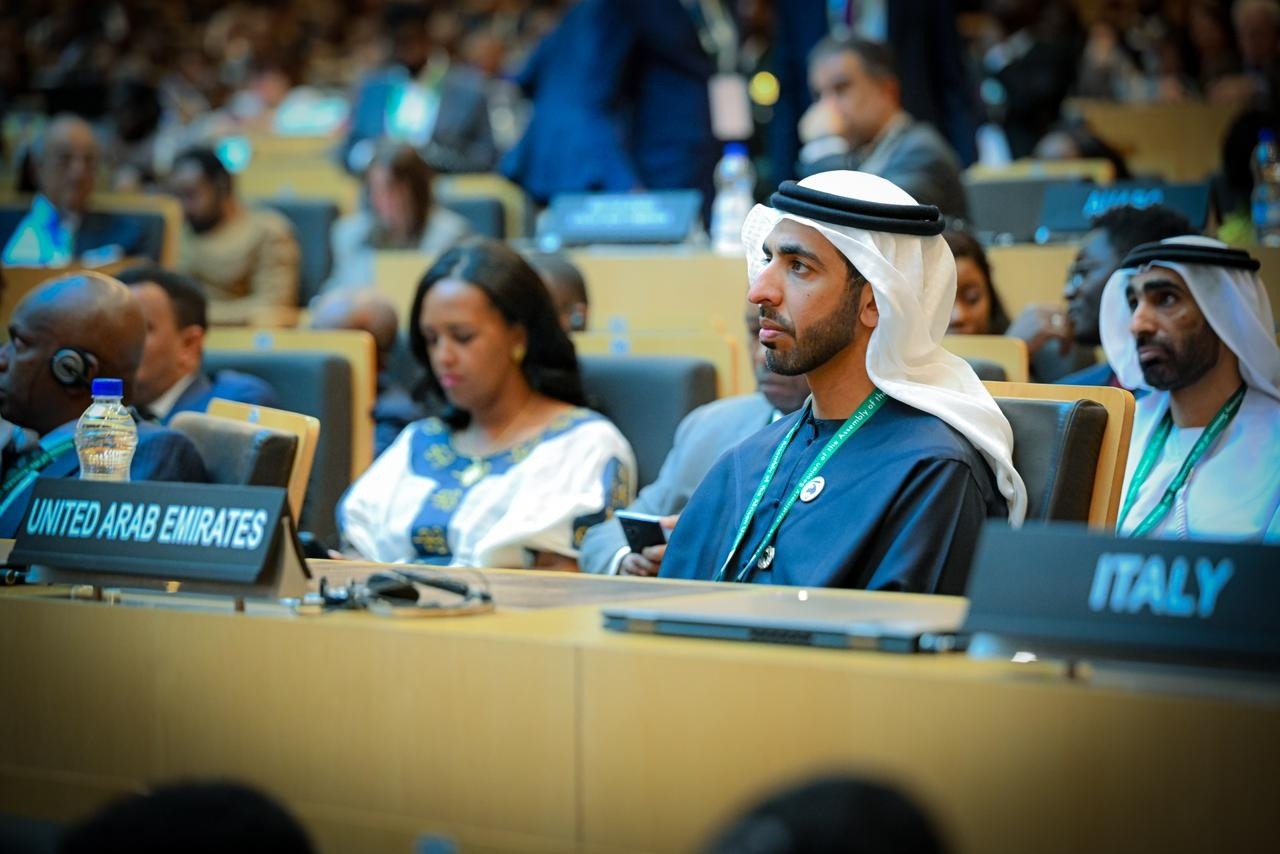
The United Arab Emirates has reaffirmed its commitment to strengthening diplomatic and economic relations with African countries. The Arab nation pledged sustained support for peace, security and sustainable development across the continent.
The UAE Minister of State, Sheikh Shakhbout bin Nahyan Al Nahyan, made this known while participating in the African Union Summit held on February 14, 2026, in Addis Ababa, Ethiopia. The summit brought together heads of state, government officials and key stakeholders to deliberate on Africa’s priorities, including economic integration and stability.
During bilateral meetings on the sidelines of the summit, the minister conveyed the greetings of the UAE leadership to member states of the African Union. He also expressed their wishes for continued progress and prosperity across the continent.
Speaking at the summit, Shakhbout said the UAE’s engagement with Africa was rooted in decades of trade, maritime ties and people-to-people connections spanning the Red Sea and Indian Ocean corridors.
He noted that the UAE currently maintains 19 embassies in Sub-Saharan Africa, with plans for further expansion. He added that African diplomatic representation in the UAE continues to grow, strengthening its role as a hub for trade, finance and dialogue.
According to him, the UAE supports the African Union’s Agenda 2063 and remains committed to deepening cooperation with the AU Commission and member states in trade, renewable energy, food security, digital transformation and capacity building.
On investment, the minister disclosed that between 2019 and 2023, the UAE committed over $110bn in investments across Africa, describing it as the highest level by any single country within the period. He added that more than $70bn of the funds were channelled into energy, green and renewable projects to boost industrialisation and economic diversification.
Under the Africa Green Investment Initiative, $4.5bn has been mobilised to accelerate clean energy development, with over 60 projects in solar, wind, geothermal, battery storage and green hydrogen technologies currently in preparation.
He further highlighted Masdar’s $10bn Africa programme and the Etihad 7 initiative, which aim to expand electricity access to up to 100 million people by 2035.
The UAE has also concluded nine Comprehensive Economic Partnership Agreements with African countries, including Nigeria, Kenya, Angola and Mauritius. The agreements, he said, go beyond tariff reductions to cover services, digital trade and investment protection, while complementing the African Continental Free Trade Area.
In the logistics sector, UAE-linked firms are expanding port operations across the continent, including a $1bn upgrade of Dar es Salaam Port in Tanzania and the construction of a new terminal in Luanda, Angola.
The minister also revealed that nearly 40 per cent of the UAE’s total foreign assistance over the past decade—amounting to about $20.9bn—has been directed to African countries in the form of development, humanitarian and charitable support.
Looking ahead, he identified water security and climate resilience as emerging priorities, noting that the UAE will co-host the 2026 UN Water Conference with Senegal in December.
He said the partnership underscores a shared commitment to accelerating progress on water security and sanitation, described as a critical development challenge across Africa.