
Headlines
US and Israel Launch Major Combat Operations Against Iran — Trump Addresses Nation as Region Braces for Fallout
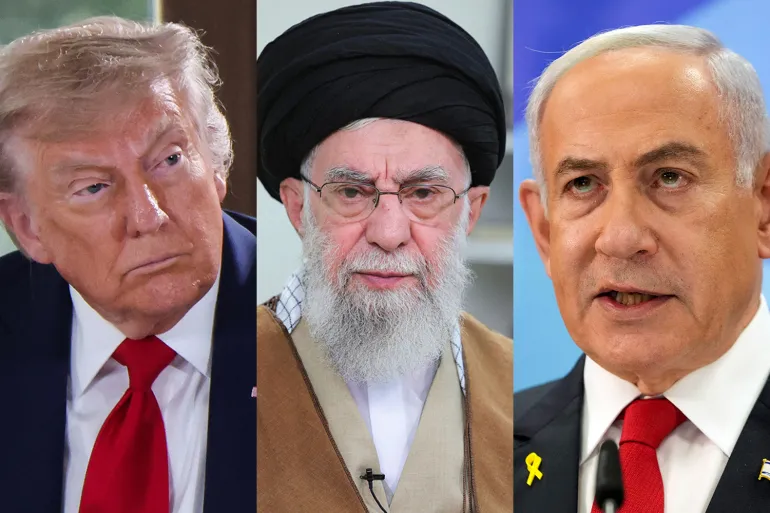
In a dramatic escalation of Middle East tensions, the United States and Israel launched a coordinated military strike against Iran on Saturday, February 28, 2026, marking one of the most significant confrontations in the region in years. Explosions were reported across Tehran and other Iranian cities as air and missile attacks struck key military and strategic targets, signalling the start of what President Donald Trump called “major combat operations.”
In a video message shared on social media, Mr. Trump confirmed American involvement in the joint operation, emphasising that the offensive aims to “eliminate imminent threats” posed by Iran’s nuclear and ballistic missile programmes. The president warned members of Iran’s Islamic Revolutionary Guard Corps (IRGC) and armed forces to lay down their weapons or face “certain death,” while portraying the strikes as necessary to defend the United States and its allies.
Trump also directly appealed to the Iranian people, calling the moment an opportunity for change and urging citizens to seize control of their government once operations conclude, a rare move underscoring the political dimension of the campaign.
The strikes reportedly targeted military infrastructure and regime installations in Tehran and elsewhere, including areas near government offices, triggering smoke plumes and reports of heavy blasts. Israel, having declared a state of emergency, closed its airspace amid fears of counterattacks, while Iran’s leadership vowed crushing retaliation.
While U.S. officials framed the action as a pre‑emptive defence measure, the international community has reacted with alarm, warning that the conflict could rapidly spiral beyond its initial scope. Early signs of retaliation emerged as Iranian forces fired missiles toward Israel and U.S. interests shortly after the strikes, illustrating how quickly the confrontation turned volatile.
The build‑up to this moment followed months of faltering diplomacy and stalled negotiations over Iran’s nuclear programme — talks that sought to limit Tehran’s nuclear ambitions but ultimately failed to produce a lasting agreement. Trump, who had repeatedly expressed frustration at the pace of negotiations, had long threatened military action if Iran did not curb its activities.
As the world watches anxiously, the unfolding military campaign has thrown global stability into question. With Iranian retaliation already in motion and regional actors on high alert, the risk of a larger conflict looms, a stark reminder that peace in West Asia remains fragile at best.