
Headlines
Military Defends Jilli Airstrike as Terror Target, Probe Begins Amid Civilian Casualty Outrage
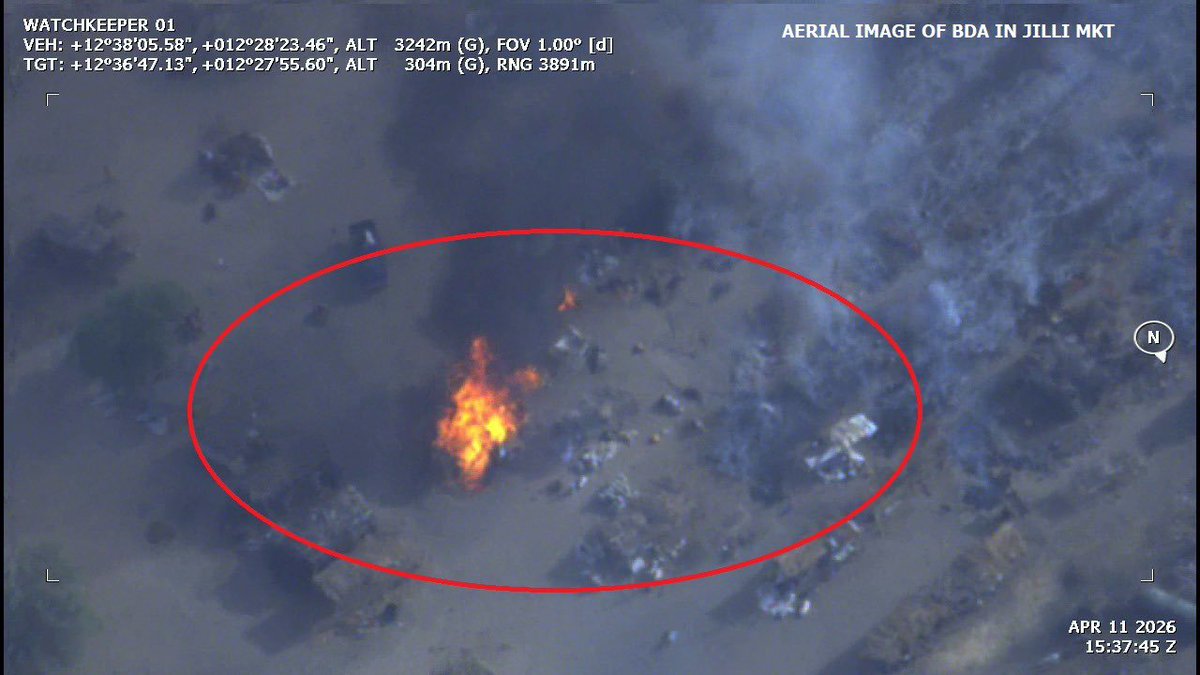
The Nigerian military has defended the controversial airstrike on Jilli market along the Borno–Yobe border, insisting it targeted a terrorist logistics hub, even as outrage grows over reports of significant civilian casualties and calls for accountability intensify.
The strike, carried out under Operation Hadin Kai on Saturday, has triggered conflicting casualty figures, with local sources claiming over 40 civilians were killed, while some rights groups suggest the toll could be higher. The military, however, maintains that the location was a legitimate operational target linked to Islamic State West Africa Province activities.
In a statement, the operation’s spokesperson, Lt. Col. Sanni Uba, said the strike followed sustained intelligence, surveillance, and reconnaissance missions over the Bindul–Jilli axis, a corridor long associated with insurgent movements. According to him, aerial surveillance tracked motorcycles and gun trucks converging on the location, corroborated by human intelligence sources identifying the gathering as a terrorist logistics operation.
“The strike was carefully planned and executed with precision after rigorous validation,” he said, adding that several militants were neutralised and their operational capacity disrupted.
The military linked the operation to recent attacks in the region, including an improvised explosive device incident in January that killed eight soldiers and coordinated assaults earlier in April around Benisheikh and Ngamdu.
However, the incident has sparked widespread condemnation. The Yobe State Emergency Management Agency confirmed that civilians, including traders from Geidam, were affected, describing the incident as an accidental strike on a busy market. Victims have since been evacuated to hospitals for treatment.
Borno State Governor, Babagana Zulum, acknowledged the military’s position but warned residents against aiding insurgents, noting that the market had been officially closed years ago due to its alleged use by terrorist groups.
Human rights organisation Amnesty International condemned the strike as “reckless” and called for an independent investigation, while former Vice-President Atiku Abubakar described the incident as a troubling reflection of the risks civilians face in conflict zones.
In response, the Nigerian Air Force announced the activation of its Civilian Harm Investigation Cell to determine the circumstances surrounding the strike. Officials said the probe would involve collaboration with community leaders and other stakeholders.
Security analysts say the incident highlights the complexities of asymmetric warfare, where insurgents often operate within civilian populations. Experts have called for improved intelligence gathering, stricter targeting protocols, and enhanced civilian protection measures to prevent future tragedies.
The Jilli strike adds to a growing list of controversial military operations in Nigeria’s long-running insurgency, raising fresh questions about balancing counterterrorism efforts with the protection of civilian lives.
See also:
Victor Glover Makes History as First Black Astronaut to Pilot Moon Mission
NBA PLAYOFF PICTURE SET AS NUGGETS TAKE THIRD.
SINNER BEATS ALCARAZ TO WIN MONTE CARLO AND RECLAIM NO.1.