
Foreign News
UK Prime Minister Keir Starmer Announces Resignation
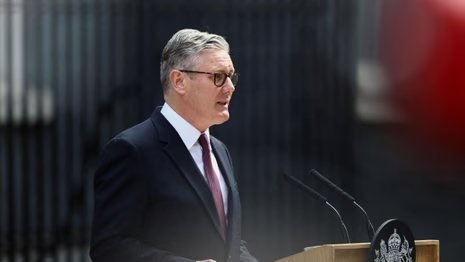
British Prime Minister Sir Keir Starmer has announced his resignation, bringing an abrupt end to a premiership that began with a historic electoral victory but gradually became overshadowed by political challenges, declining public support and growing unrest within the ruling Labour Party.
Starmer confirmed on Monday that he would step down as leader of the Labour Party and Prime Minister, although he is expected to remain in office until a successor is chosen through the party’s leadership selection process. Reports indicate that a new leader could emerge before Parliament reconvenes after the summer recess.
The resignation marks a dramatic development in British politics, coming less than two years after Labour secured a landslide victory in the 2024 general election, ending 14 years of Conservative Party rule and returning the centre-left party to power. Starmer had been widely credited with rebuilding Labour after years in opposition, but his government struggled to maintain public confidence amid economic pressures and internal party divisions.
Political pressure on the prime minister intensified in recent months following disappointing election performances by Labour and growing concerns among party members about the government’s direction. Analysts say poor polling figures, policy reversals and dissatisfaction among lawmakers contributed to mounting calls for a change in leadership.
The immediate crisis deepened after the recent parliamentary victory of prominent Labour figure Andy Burnham, whose return to Westminster fuelled speculation about a potential leadership challenge. Burnham is now widely regarded as one of the leading contenders to succeed Starmer, although other senior Labour figures are also expected to be considered.
In his resignation announcement, Starmer reportedly acknowledged the need for the party to move forward under new leadership while pledging to support an orderly transition. His departure will trigger a leadership contest at a critical period for Labour as it seeks to stabilise its government and rebuild political momentum.
Starmer’s resignation continues a remarkable period of political instability in the United Kingdom. Since the Brexit referendum in 2016, Britain has witnessed a succession of prime ministers, with frequent leadership changes reflecting deep political divisions and voter dissatisfaction over issues ranging from the economy and immigration to public services and national identity.
During his time in office, Starmer sought to project an image of stability and pragmatic governance. His administration recorded some diplomatic successes and pursued reforms in key sectors, but critics argued that the government lacked a clear vision capable of addressing the country’s long-term challenges.
Financial markets reacted cautiously to the announcement, while political observers began assessing the potential implications of a new Labour leadership on economic policy, public spending and Britain’s international relationships.
As the Labour Party prepares for a leadership race, attention will now focus on who emerges as Starmer’s successor and whether a new prime minister can restore confidence in a government facing growing political and economic pressures. The outcome of the transition is expected to have significant consequences not only for Britain but also for its relations with allies and trading partners around the world.