
Editorial
Peter Obi and the Search for a New Political Direction
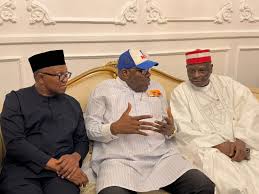
As the political atmosphere in Nigeria continues to heat up towards the 2027 general elections, Mr Peter Obi, former Governor of Anambra State and the Labour Party’s 2023 presidential candidate, is once again on the move.
The former Anambra governor has abandoned the African Democratic Congress (ADC) for the Nigeria Democratic Congress (NDC), aligning himself with former Kano State Governor, Rabiu Musa Kwankwaso. This latest political migration, which took place in May 2026, adds yet another chapter to Obi’s long list of party affiliations — from APGA to PDP, Labour Party, ADC, and now NDC.
At the heart of this restless journey is Obi’s determined search for a viable political platform that can convert his enormous personal popularity and the passionate support of the “Obidient” movement into a winnable electoral force.
There is no denying the strength of the Peter Obi brand. He remains one of the few Nigerian politicians who projects an image of modesty, fiscal discipline, competence, and relative integrity. His record as governor of Anambra State, particularly in education, healthcare, and security, continues to earn him respect even from his critics. In 2023, he demonstrated a rare ability to galvanise young Nigerians across ethnic and religious lines in a manner few politicians have achieved in recent times.
However, Obi’s frequent party-hopping is increasingly raising eyebrows. Critics now openly describe him as a political nomad who exits any party the moment it refuses to bend to his wishes or guarantee him an automatic ticket. This pattern raises legitimate questions about his ability to build strong, enduring institutions, which is a vital quality required of anyone who aspires to lead Nigeria’s complex and diverse federation.
The move to the NDC appears calculated. The party is said to have zoned its 2027 presidential ticket to the South and is reportedly open to a single four-year term arrangement, both of which suit Obi’s ambition. The alliance with Kwankwaso is also a clear attempt to address one of Obi’s major weaknesses in 2023 — limited support in the North.
Yet significant challenges remain. The Obidient movement, though highly energetic on social media and among urban youths, has struggled to develop the deep grassroots structures necessary to confront Nigeria’s powerful, money-driven political machines. Incumbency advantages, vote buying, and entrenched ethnic-religious voting patterns still define the nation’s electoral reality.
Peter Obi has successfully positioned himself as the leading voice of a “New Nigeria”, a departure from the old order of waste, impunity, and recycled leadership. But in the months ahead, popularity and compelling rhetoric will not be enough. The real test is whether he can transform his personal brand and passionate following into a disciplined, well-organised, and truly national political movement capable of winning power.
Nigeria urgently needs a new political direction rooted in competence, accountability, transparency, and genuine nation-building. The big question that remains unanswered is whether Peter Obi, for all his appeal and vision, can provide that direction — or whether his search for the perfect platform will ultimately become an endless and fruitless journey.
The clock is ticking. 2027 is nearer than many realise.