
Economy
NNPC Opposes Dangote Refinery Suit, Warns Against Monopoly in Fuel Market
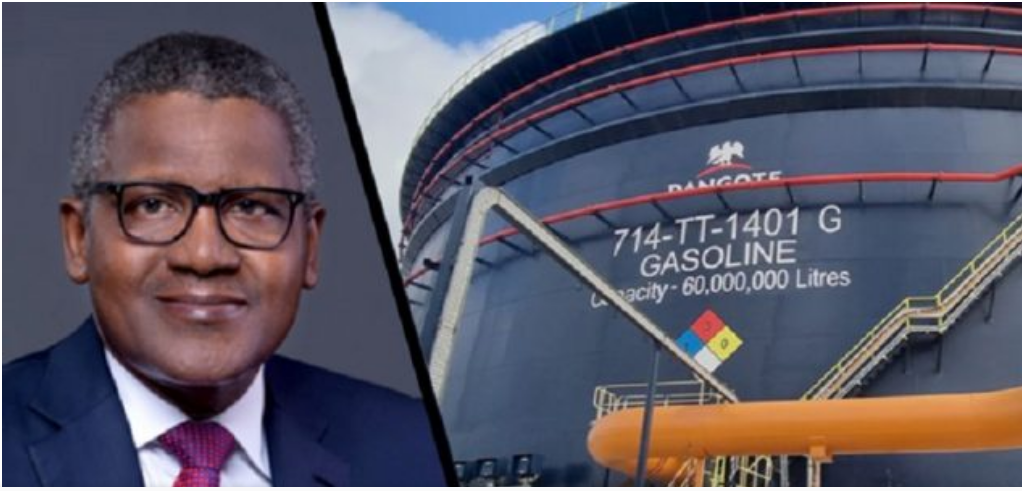
The Nigerian National Petroleum Company Limited has asked the Federal High Court in Lagos to dismiss a suit filed by the Dangote Petroleum Refinery and Petrochemicals, warning that granting the refinery’s requests could create a monopoly in Nigeria’s downstream petroleum sector.
The position of the national oil company was contained in a counter-affidavit filed before the Federal High Court in Suit No: FHC/L/CS/857/2026.
According to court documents obtained by journalists, NNPC argued that petroleum products produced by the Dangote refinery are currently sold at “significantly high and fluctuating market prices,” insisting that no single operator should dominate the country’s fuel supply chain.
The company urged the court to either dismiss or strike out the suit, describing it as incompetent, premature and lacking sufficient legal basis.
NNPC further argued that the action constituted an abuse of court process.
Although details of Dangote refinery’s specific claims were not fully disclosed in the filing, the legal dispute is understood to be linked to issues surrounding fuel supply, pricing and market operations within Nigeria’s liberalised petroleum sector.
The development highlights growing tensions in Nigeria’s energy industry as the Dangote refinery expands its influence in fuel production and distribution.
The refinery, regarded as Africa’s largest single-train refinery, has become a major supplier of petrol, diesel and aviation fuel in Nigeria since commencing operations.
Its growing market role has sparked debates over competition, pricing power and the future structure of the downstream oil sector.
Meanwhile, the Petroleum Products Retail Outlet Owners Association of Nigeria also backed the NNPC’s position, arguing that competition must be protected to prevent price manipulation and excessive market control.
PETROAN maintained that allowing multiple fuel suppliers and importers to operate freely would help stabilise prices and improve supply nationwide.
The association warned that concentrating too much market power in one refinery could expose consumers to arbitrary pricing and weaken competition in the long term.
Industry stakeholders say the case could become one of the most significant legal battles in Nigeria’s oil sector since the implementation of petroleum market reforms under the Petroleum Industry Act.
The dispute comes at a sensitive period when Nigerians are already grappling with rising fuel prices triggered by global crude oil volatility linked to the Middle East crisis.
In recent months, petrol prices rose sharply across the country after crude oil prices surged above $100 per barrel following tensions between the United States and Iran.
Although oil prices have recently begun to decline amid ongoing diplomatic talks, marketers and consumers remain concerned about the stability of fuel prices in the domestic market.
Economic analysts note that the Dangote refinery has played a major role in reducing Nigeria’s dependence on imported fuel products, but they also stress the importance of maintaining a competitive market structure.
Observers believe the outcome of the court case could shape the future of fuel pricing, supply dynamics and private sector participation in Nigeria’s petroleum industry.
The Federal High Court is expected to continue hearing arguments from all parties in the coming weeks.