
Headlines
Presidency Rejects Claims Tinubu Promised Not to Seek Re-Election Over Electricity Supply
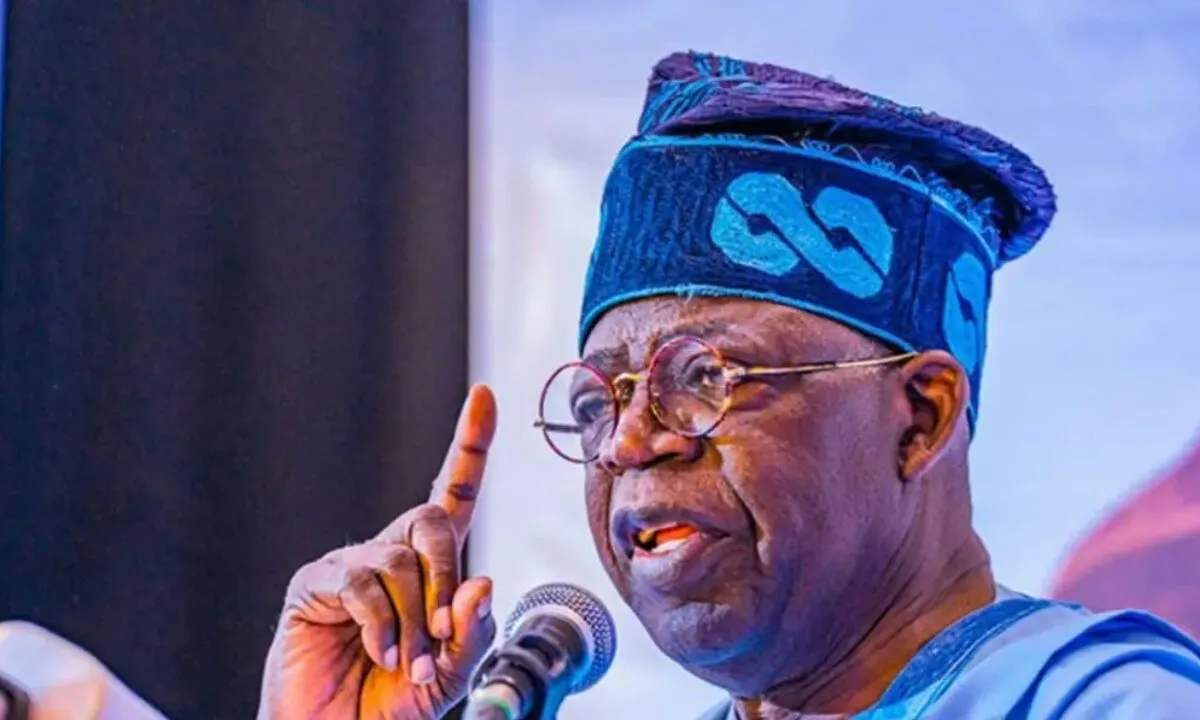
The Presidency has dismissed claims that President Bola Tinubu pledged not to seek a second term in office if he failed to significantly improve electricity supply within his first four years in power, insisting that the President’s remarks have been repeatedly misrepresented by critics.
Special Adviser to the President on Media and Publicity, Bayo Onanuga, made the clarification during an interview on Arise News on Tuesday, where he addressed growing public debate surrounding comments Tinubu made before the 2023 presidential election.
The controversy stems from a statement the then-presidential candidate made during a business luncheon in December 2022, when he sought to reassure investors and business leaders about his plans for Nigeria’s troubled power sector.
At the event, Tinubu had declared: “If I don’t give you constant electricity for four years, when I come back for a second term, don’t vote for me.”
The remark has since resurfaced in political discussions and on social media, with critics arguing that the President should be held accountable for what they interpret as a direct promise tied to his re-election prospects.
However, Onanuga argued that such interpretations fail to capture the full context of the statement.
According to him, opponents of the administration often isolate a single sentence while ignoring the broader discussion in which Tinubu outlined his vision for power sector reforms and the conditions necessary to achieve stable electricity supply.
The presidential spokesman maintained that the President’s comments were conditional and aspirational rather than an absolute commitment to abandon a second-term bid if power challenges persist.
He said the administration remains focused on implementing reforms aimed at improving electricity generation, transmission and distribution across the country.
The issue of electricity remains one of the most important governance challenges facing Nigeria. Despite decades of reforms, privatisation efforts and significant investments, millions of Nigerians continue to experience unreliable power supply, forcing households and businesses to depend heavily on generators and alternative energy sources.
Successive administrations have made promises to improve the sector, making electricity a recurring campaign issue during election cycles.
Since assuming office in May 2023, Tinubu’s government has introduced a series of measures aimed at attracting private investment into the energy sector, expanding power infrastructure and addressing longstanding bottlenecks affecting electricity delivery.
Supporters of the administration argue that meaningful improvements in power supply require structural reforms, substantial funding and time, given the complexity of challenges inherited over several decades.
Critics, however, maintain that Nigerians should evaluate the government based on its campaign promises and measurable outcomes, particularly in sectors that directly affect economic growth and living standards.
The debate over Tinubu’s comments comes at a time when the administration is facing increased scrutiny over its performance in key sectors, including power, the economy, security and infrastructure, as political discussions gradually shift toward the next electoral cycle.
Political analysts note that electricity remains one of the most visible indicators by which many Nigerians judge government performance. As a result, statements made by political leaders on the issue often attract significant public attention and remain part of political discourse long after campaigns have ended.
While the Presidency insists the President’s remarks have been taken out of context, the discussion highlights the continued importance of reliable electricity supply in shaping public perceptions of governance and leadership in Nigeria.