
Headlines
El-Rufai Arraigned in Kaduna Amid Tight Security Over Alleged Corruption Charges
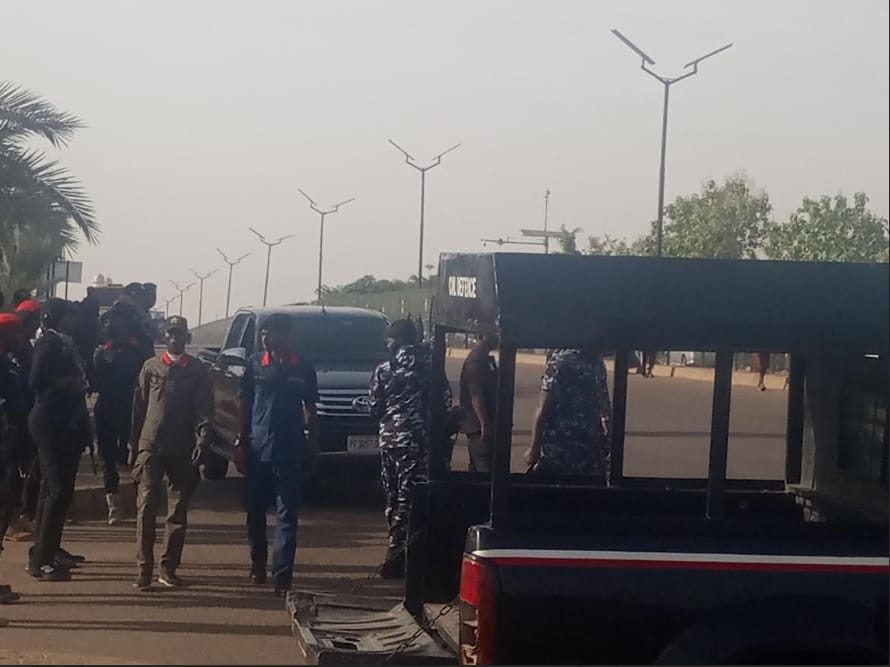
Former Kaduna State Governor Nasir El-Rufai was on Tuesday arraigned before the Federal High Court in Kaduna under heavy security, as proceedings commenced in a high-profile corruption case brought against him by the Independent Corrupt Practices and Other Related Offences Commission.
The ex-governor arrived at the court premises around 9:00 a.m. in a security convoy and remained briefly inside a vehicle before being escorted into the courtroom by operatives of the ICPC and the Department of State Services.
Security was significantly heightened around the court complex, located within the old Nigerian Defence Academy area, with personnel drawn from the Nigeria Police Force, Mobile Police, DSS and the Nigeria Security and Civil Defence Corps. Movement around the area was restricted, causing traffic disruptions along major routes in Kaduna.
Journalists were denied access to the courtroom despite arriving early to cover the proceedings, underscoring the sensitivity of the case.
The ICPC had earlier announced that El-Rufai would be arraigned alongside one Joel Adoga in a case involving allegations of conversion and possession of public property as well as money laundering. The charges form part of broader investigations into financial activities during his tenure as governor from 2015 to 2023.
In addition, the commission disclosed that a separate case has been filed before a Kaduna State High Court against El-Rufai and another individual, Amadu Sule, bordering on alleged abuse of office, fraud and conferring undue advantage.
The arraignment follows weeks of controversy surrounding the former governor’s detention. He was initially arrested by the Economic and Financial Crimes Commission in February, granted bail, and later re-arrested by the ICPC, sparking criticism from political groups and civil society organisations.
Groups including the African Democratic Congress and the Muslim Rights Concern had called for either his release or formal arraignment, citing concerns over due process.
The ICPC has maintained that all actions taken comply with the law, emphasising its commitment to accountability and the rule of law.
Legal observers say the case could test Nigeria’s anti-corruption framework and signal how far authorities are willing to pursue accountability for former public officials.
See also:
“Trump Condemns Bombings; Criticize Tinubu Government”.
Senator Wamakko gives N1,000 each to over 10,000 orphans to Celebrate Sallah.
UK Tightens Security, Imposes Airspace Restrictions Ahead of Tinubu’s Windsor Visit
Nine Senators Defect to ADC as Political Realignments Continue in Senate