
Grassroots
Military May Allow Journalists Join Operations Under New Defence Ministry Initiative
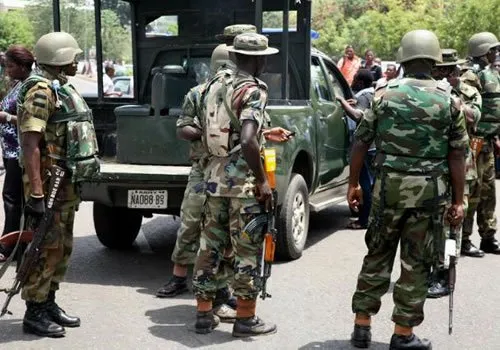
The Federal Government is considering a new initiative that would allow journalists to accompany military personnel during selected operations as part of efforts to improve security reporting, strengthen public trust and provide citizens with firsthand accounts of the country’s security challenges.
The proposal was disclosed on Thursday by the Minister of Defence, Gen. Christopher Musa, during the National Security Summit organised by the Nigeria Union of Journalists in Abuja.
Represented at the event by his Special Adviser, Rear Admiral Olusanya Bankole, the minister said the arrangement, if implemented, would promote greater collaboration between the media and security agencies while enhancing transparency in military operations.
According to Musa, the initiative is designed to enable journalists gain a deeper understanding of the realities faced by troops on the frontlines and ensure more accurate reporting of military activities.
“The Defence Ministry is exploring arrangements to embed journalists with military units during operations to enable more accurate reporting and deeper understanding of operational realities,” the minister said.
He noted that the changing nature of modern conflicts has expanded the role of the media beyond merely reporting events, making journalists key stakeholders in national security management.
Musa observed that contemporary security threats are increasingly shaped not only by battlefield engagements but also by information, narratives and public perception. As a result, he said, the media has become an essential component of efforts to maintain national stability.
“More than ever before, the media are not only enablers; they are stabilisers of government,” he stated.
The minister stressed that the effectiveness of security operations should not be measured solely by military successes against insurgents and criminal groups, but also by the degree of confidence and trust citizens place in security institutions.
He added that the proposed initiative forms part of broader efforts by the Ministry of Defence to deepen engagement with the media and ensure that information relating to military operations is communicated accurately and responsibly.
Nigeria has for years grappled with multiple security challenges, including insurgency in the North-East, banditry and kidnapping in the North-West, communal clashes in parts of the North-Central region, separatist agitations in the South-East and oil theft in the Niger Delta.
Throughout these conflicts, security agencies have often faced criticism over limited access granted to journalists covering operations. Media organisations and civil society groups have repeatedly argued that restricted access to conflict zones has sometimes created information gaps, fuelled speculation and encouraged the spread of misinformation.
Analysts say embedding journalists with military formations, a practice adopted by several countries during major military campaigns, could help bridge the trust deficit between the armed forces and the public.
The concept gained global prominence during the Iraq War, when journalists were attached to military units to provide real-time coverage from operational theatres. Proponents argue that such arrangements provide reporters with firsthand knowledge of military activities while helping security agencies communicate their efforts more effectively.
However, media experts have also cautioned that clear operational guidelines would be necessary to strike a balance between national security considerations and the independence of journalists.
Industry stakeholders at the summit noted that closer cooperation between the media and security agencies could contribute significantly to countering disinformation, improving crisis communication and strengthening national security.
If implemented, the initiative could mark a significant shift in the relationship between Nigeria’s security institutions and the media, potentially opening up previously restricted operational areas to carefully selected journalists under agreed protocols.