
Grassroots
Lagos Insists Monthly Sanitation Exercise Will Hold, Dismisses Legal Concerns
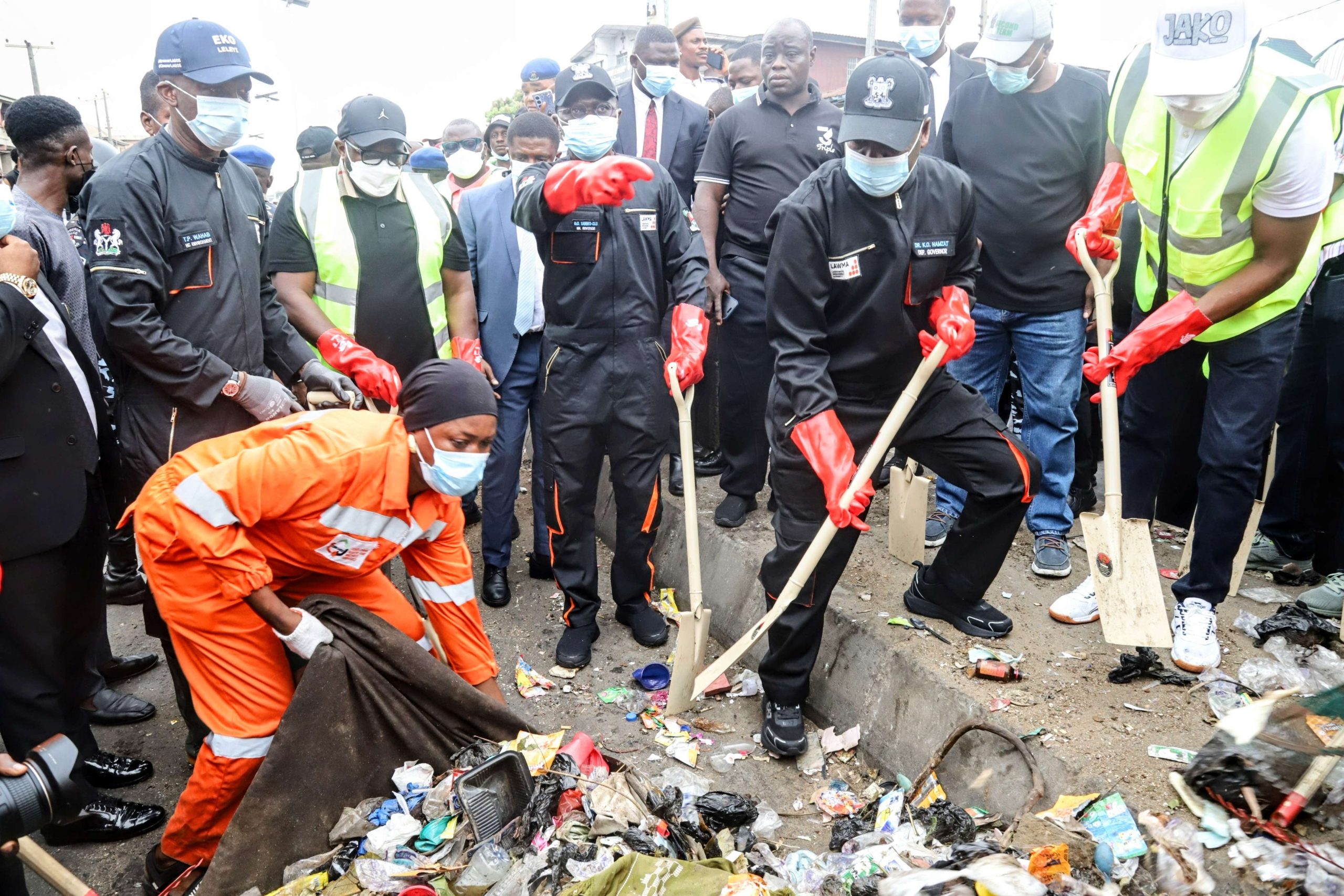
The Lagos State Government has reaffirmed that its monthly environmental sanitation exercise remains in force and will go ahead as scheduled, dismissing claims that a court ruling had halted the initiative.
The exercise, set to take place between 6:30 a.m. and 8:30 a.m. on Saturday, has been a longstanding public health measure aimed at improving cleanliness and environmental conditions across Nigeria’s commercial capital. However, recent reports questioning its legality prompted the government to issue a fresh clarification.
Speaking ahead of the exercise, the Commissioner for the Environment and Water Resources, Tokunbo Wahab, stated that no court decision had nullified the programme. According to him, the state had successfully defended the policy at the appellate level.
“No court pronouncement has invalidated this exercise. The state proceeded to the Court of Appeal, and judgment was delivered in our favour,” Wahab said, adding that the court affirmed the legality and constitutionality of the laws backing environmental sanitation enforcement in the state.
Environmental sanitation exercises were once a nationwide practice in Nigeria, particularly during military rule, when movement was restricted for a few hours each month to allow residents to clean their surroundings. While the policy was discontinued at the federal level, Lagos has retained a modified version as part of its broader waste management and public health strategy.
Wahab urged residents to ignore what he described as misinformation circulating about the programme, stressing that the initiative is both lawful and necessary. He noted that the government had spent over a year planning and refining the exercise to ensure its effectiveness.
“We cannot continue to complain about dirty surroundings while neglecting our individual responsibilities,” he said. “Environmental sanitation is a shared duty between the government and the people.”
The commissioner also highlighted the role of key stakeholders, particularly transport unions, in ensuring compliance. According to him, major transport groups, which control a significant portion of vehicles operating within the state, have agreed to suspend operations during the two-hour sanitation window.
“If government vehicles are staying off the roads, it is reasonable for residents to do the same for just two hours,” he added.
Authorities clarified that exemptions would be granted for essential situations, including medical emergencies, travellers with scheduled flights, and students sitting critical examinations such as those conducted by the Joint Admissions and Matriculation Board (JAMB).
To support the exercise, the Lagos Waste Management Authority (LAWMA) has been fully mobilised to handle waste collection and disposal, while environmental health officers will be deployed across communities to monitor compliance and enforce sanitation regulations where necessary.
Urban sanitation remains a critical issue in Lagos, a densely populated megacity grappling with rapid urbanisation, waste generation, and environmental degradation. Poor waste disposal has been linked to flooding, disease outbreaks, and declining living standards in some parts of the state.
Government officials say sustained public participation is key to reversing these trends. They argue that beyond enforcement, behavioural change among residents is essential to achieving long-term environmental sustainability.
As the exercise approaches, the state government has called on Lagosians to take ownership of their surroundings and demonstrate civic responsibility.
“Let us show Lagos and the world that we are ready to take ownership of our environment,” Wahab said.