
News
Akpabio Mocks ADC as Defections Hit Party, Senators Switch Allegiance
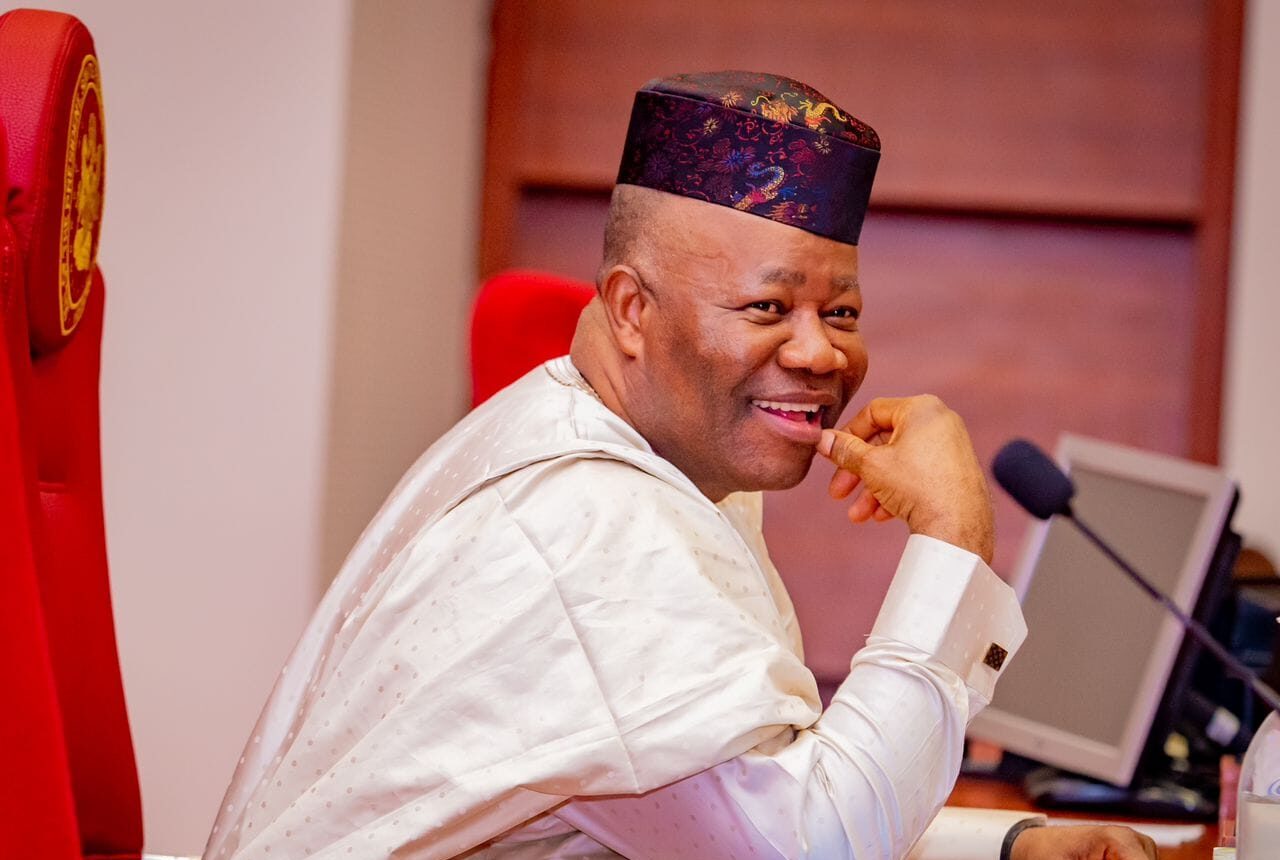
Senate President Godswill Akpabio on Tuesday stirred reactions in the National Assembly after joking that the African Democratic Congress was “effectively dead” following a fresh wave of defections by lawmakers.
Akpabio made the remark during plenary while presiding over proceedings in the Senate chamber, shortly after the formal announcement of several defections involving members leaving the ADC for other political platforms.
Among those who switched allegiance was Senator Victor Umeh, who reportedly moved to the Nigeria Democratic Congress, citing internal crises and persistent litigation within his former party.
“Maybe all those defecting from ADC should just compile everything in one paper and bring it, so that we don’t keep announcing,” Akpabio said in a light-hearted tone, drawing laughter and mixed reactions from lawmakers present.
He added that the frequency of defections had become notable, jokingly suggesting that the situation reflected deeper issues within the ADC’s internal structure.
The comment comes amid growing instability within several opposition parties, particularly the ADC, which has recently witnessed high-profile exits by prominent politicians and lawmakers.
Political observers say the wave of defections is linked to ongoing leadership disputes, legal battles and internal divisions that have weakened cohesion within the party.
The development is also occurring against the backdrop of broader political realignments ahead of the 2027 general elections, with opposition figures increasingly repositioning themselves through new alliances and platforms.
The emergence of the Nigeria Democratic Congress as a new political force has further accelerated these movements, attracting politicians seeking a more stable platform free from internal crises.
In addition, some lawmakers have reportedly joined the Labour Party, which gained national prominence during the 2023 general elections and continues to attract support among younger voters and reform-minded politicians.
Frequent defections have long been a feature of Nigeria’s political landscape, often driven by internal party disagreements, leadership struggles and strategic calculations ahead of elections.
Analysts note that such movements, while constitutionally permitted under certain conditions, raise questions about party discipline, ideological consistency and the stability of Nigeria’s democratic institutions.
The Senate has in recent weeks processed multiple notices of defection, highlighting the fluid nature of party affiliations within the legislature.
Akpabio’s remarks, though made in jest, underscore growing concerns about the viability of some opposition platforms as they grapple with internal crises and the challenge of maintaining unity.
Observers warn that continued fragmentation within opposition parties could affect their ability to present a strong challenge to the ruling All Progressives Congress in the next electoral cycle.