
Headlines
Nigeria-US Operation Kills Senior ISIS Commander Abu-Bilal Al-Manuki
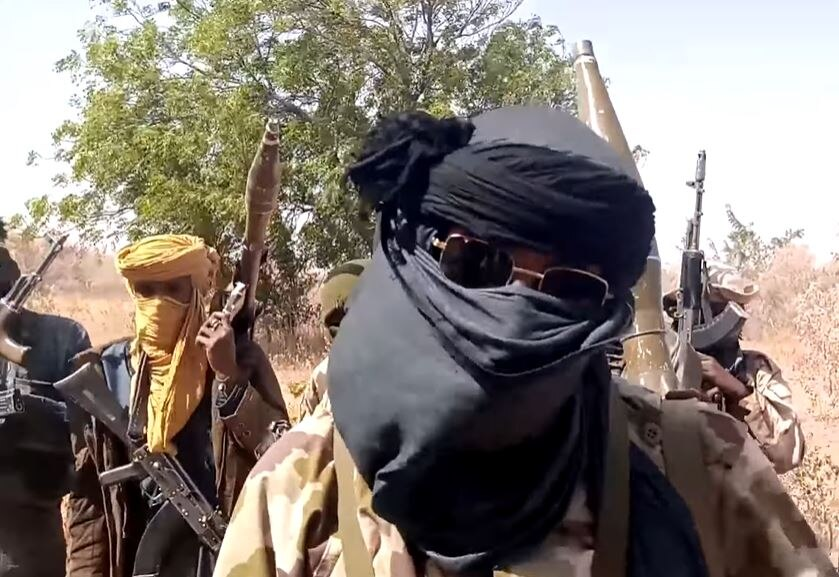
Nigeria and the United States have confirmed the killing of senior Islamic State commander Abu-Bilal Al-Manuki, also known as Abu-Mainok, during a joint military operation in the Lake Chad Basin, in what officials described as a major breakthrough in the fight against terrorism in West Africa.
President Bola Tinubu described the operation as a “daring joint operation” that dealt a significant blow to ISIS networks operating across the region.
US President Donald Trump also confirmed the development, describing Al-Manuki as “the most active terrorist in the world” and the “second in command of ISIS globally.”
Security sources and counterterrorism experts say the death of the militant leader could weaken extremist coordination within the Lake Chad Basin, an area that has remained a major hotspot for insurgent activities for more than a decade.
Nigerian-born militant linked to ISIS expansion
According to the Counter Extremism Project and Nigeria’s Defence Headquarters, Al-Manuki was born as Abu Bakr ibn Muhammad ibn ‘Ali al-Mainuki in Mainok, near Benisheikh in Borno State in 1982.
He reportedly operated under multiple aliases including Abu Bilal Al-Minuki, Abor Mainok and Abubakar Mainok.
The militant was said to have emerged from the Boko Haram insurgency before formally aligning with ISIS in 2015, following the factional split that created the Islamic State West Africa Province.
Rise within ISIS structure
Counterterrorism reports identified Al-Manuki as a senior ISIS figure within the Lake Chad division of the group’s General Directorate of Provinces, which oversees operations across several regions globally.
The United States government designated him a Specially Designated Global Terrorist on June 8, 2023, over allegations of involvement in international extremist operations.
Security analysts say he became increasingly influential after the 2018 killing of former ISWAP leader Mamman Nur, eventually rising as a key commander within ISIS-linked structures in West Africa.
Authorities also linked him to ISIS’s al-Furqan office network, which reportedly coordinated operations, logistics and strategic planning across Nigeria, the Sahel and the Islamic State in the Greater Sahara.
Role in weapons, propaganda and drone operations
Nigeria’s Defence Headquarters disclosed that Al-Manuki played a central role in weapons manufacturing, explosives development and drone-related operations within ISIS networks operating in the region.
Military officials also described him as a major figure in ISIS propaganda and communication systems, responsible for strengthening the group’s media operations and strategic messaging.
His activities reportedly extended beyond Nigeria into wider Sahel operations, where extremist groups continue to exploit weak border controls and political instability.
Security reports further suggested that he was involved in internal tensions among extremist factions, including disagreements with the late Boko Haram leader Abubakar Shekau.
Strategic importance of the operation
The joint Nigeria-US operation highlights growing military cooperation between both countries in combating terrorism and insurgency in the Lake Chad Basin.
The region, which includes parts of Nigeria, Niger, Chad and Cameroon, has experienced years of violent attacks, mass displacement and humanitarian crises linked to Boko Haram and ISIS-affiliated groups.
Security experts say the elimination of a figure of Al-Manuki’s profile could disrupt operational coordination within extremist networks, though they warn that insurgent groups often reorganise quickly after leadership losses.
The development comes amid renewed counterterrorism efforts by Nigerian forces and international allies seeking to weaken extremist activities across the Sahel.
Analysts also note that the operation reflects increasing reliance on intelligence-sharing, surveillance technology and cross-border cooperation in modern counterterrorism operations.