
Headlines
Akpabio, Oshiomhole Clash on Senate Floor Over Rules as Tensions Rise After Amendments
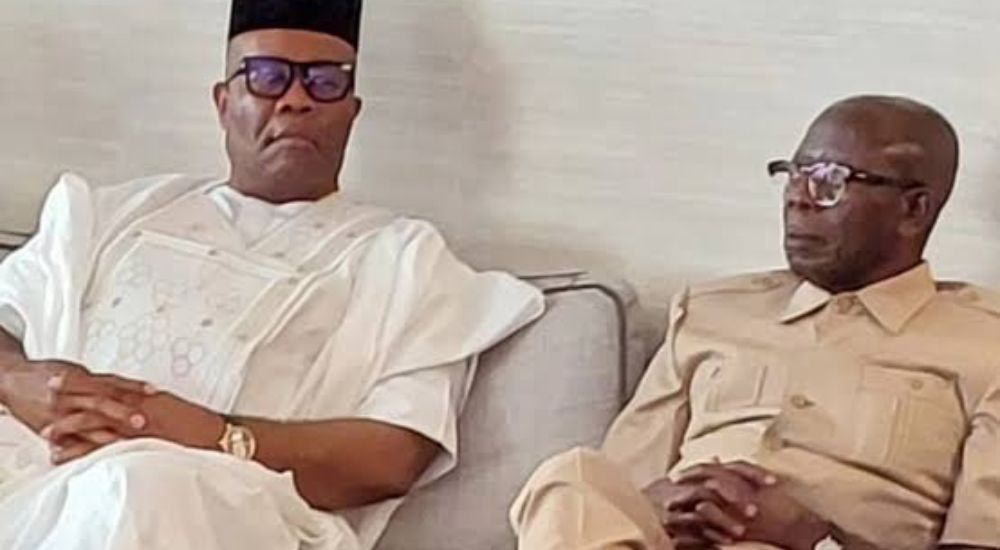
Proceedings in the Nigerian Senate were briefly disrupted on Wednesday following a heated exchange between Senate President Godswill Akpabio and Senator Adams Oshiomhole over the interpretation of the chamber’s rules.
The disagreement occurred during plenary as Akpabio began reading the Votes and Proceedings from the previous day’s sitting. Oshiomhole raised a point of order, prompting the Senate President to immediately rule him out of order, citing provisions of the Senate Standing Orders 2023 (as amended), which do not permit such interventions at that stage.
Despite repeated warnings, the former Edo State governor insisted on being heard, leading to a tense exchange that lasted for about 10 minutes and momentarily stalled legislative business.
In an effort to clarify the rules, Akpabio invited former Senate Chief Whip Orji Kalu to weigh in. Kalu affirmed that points of order are not allowed during the consideration of Votes and Proceedings, backing the Senate President’s position.
However, Oshiomhole continued to press his objection, drawing further reactions from lawmakers. Senate Whip Tahir Monguno subsequently cautioned him against disrupting proceedings, warning that disciplinary measures could be applied if he persisted.
Akpabio then resumed the session, directing senators to specific sections of the document under review while urging members to familiarise themselves with parliamentary procedures.
“We should not just come here without knowing the rules,” the Senate President said, issuing a stern warning to Oshiomhole against further disorderly conduct.
“If you become unruly, we will use the rules to take you out of the Senate,” he added.
The tension eventually eased, allowing the chamber to continue its business. Senator Adamu Aliero later moved a motion for the adoption of the Votes and Proceedings, which was seconded by Senate Minority Leader Abba Moro.
Political observers believe the confrontation may be linked to the Senate’s recent amendment of its standing rules, which introduced stricter eligibility criteria for presiding and principal offices within the 11th Senate.
The amendments to Orders 4 and 5, reportedly adopted after a closed-door session, are seen as a significant shift in the internal governance of the upper legislative chamber. Analysts say the new rules could influence power dynamics among senators, particularly those with leadership ambitions.
Tensions within legislative bodies are not uncommon, especially following procedural changes that affect hierarchy and influence. However, Wednesday’s exchange highlights the sensitivity surrounding rule interpretation and enforcement in Nigeria’s National Assembly.
While the session ultimately proceeded without further disruption, the incident underscores growing friction within the Senate as lawmakers navigate new procedural frameworks and political alignments.